


 Basket (
 Main Menu

European Oak Cladding
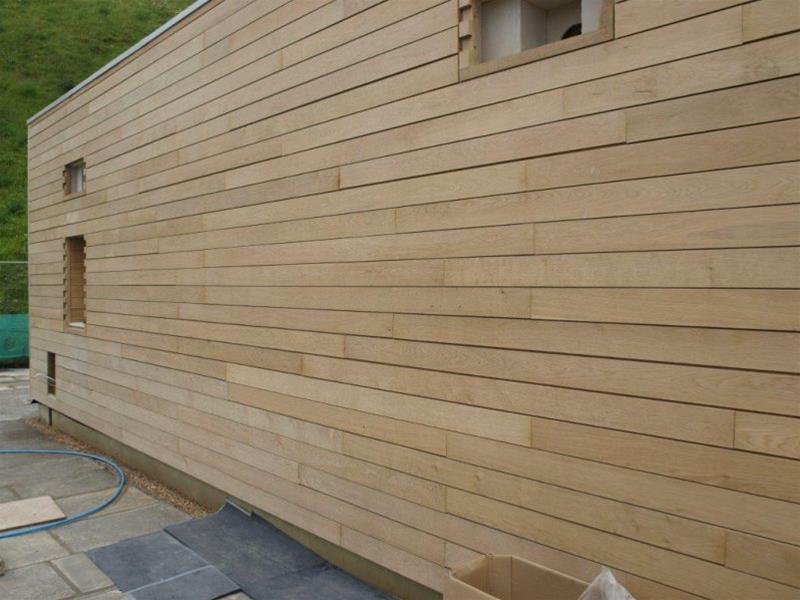
Oak cladding is the most durable external cladding we supply and is readily available in a number of profiles to suit your project. The level of choice is increased further by the number of grades available to you: European Oak's versatility gives you kiln dried, fresh sawn and air dried options.
Oak is commonly chosen for timber cladding over alternatives like Cedar and Larch because of its durability, knot content (and look), colour and weight. As with all our timber, our European Oak cladding is sourced from sustainable forests.
You can view example prices below.







Example Pricing
| Grade | IWC9 Feather-edged 200mm (175 face) Feather Edge Cladding | IWC17 Feather-edged 200mm (175 face) Feather Edge Cladding | IWC21 Feather-edged 175mm (150 face) Feather Edge Cladding | IWHL1 Half Lap Cladding Half Lap Cladding | IWC1 T&G 145mm (135 face) x 19mm Tongue and Groove Cladding | IWC3 T&G 142mm (125 face) x 19mm Tongue and Groove Cladding | IWC5 T&G 145mm (125 face) x 19mm Tongue and Groove Cladding | IWC6 Ship-lap 145mm (135 face) x 19mm Shiplap Cladding | IWC8 Rainshield 142mm (138 face) x 19mm Rainshield Cladding | IWC28 Board on Board (174mm face) Board on Board Cladding | IWC11 One Waney Edge Avg 250 x 20mm Waney Edge Cladding |
|---|---|---|---|---|---|---|---|---|---|---|---|
| Light Character Price (ex VAT) | - | - | - | - | £82.12 / m2 | £88.69 / m2 | £88.69 / m2 | £82.12 / m2 | £80.33 / m2 | £114.36 / m2 | - |
| Air Dried Character Quality Price (ex VAT) | - | - | - | £60.51 / m2 | - | - | - | - | - | - | - |
| Fresh Sawn Character Grade Price (ex VAT) | £33.38 / m2 | £28.10 / m2 | £27.14 / m2 | - | - | - | - | - | - | - | - |
| Fresh Sawn Character Grade Waney Edge Price (ex VAT) | - | - | - | - | - | - | - | - | - | - | £38.08 / m2 |
Choosing a Grade of Oak for Cladding
Choosing a grade of Oak for your cladding normally comes down to the kind of cladding you want to install. For example, if you are looking for feather edge or waney edge, then only fresh sawn character grade is available.
Fresh sawn is a great option for cladding. Not only is it cost effective, it also needs minimal maintenance before installation. The reason Oak can't be fresh sawn for claddings like Tongue and Groove or Shiplap is that there is too much movement, so you would notice gaps appear as the timber dries. This is not a problem for Feather Edge or Waney Edge because the timber is overlapped enough to counteract the movement.
On the Half Lap cladding you get a choice of either Light Character (which is kiln dried) or Air Dried Character Quality. Both of these timbers will contain knots, so what's the main difference? Well, it's all down to the drying process. Kiln dried timber is heated in a kiln until it reaches the required moisture content. This prevents the timber from splitting as it dries, leaving a nice clean finish once it's been machined. The Light Character half lap is our internal grade; if you want to use it externally, it must be sealed before installation to prevent moisture getting into the Oak. This helps prevent movement issues where the timber would swell in the winter and contract again in the summer months.
The Air Dried Character Quality, on the other hand, is great for external use as it has already naturally done most of its movement. Along each board you will see the character of the wood, as it will have lines running through it where it has split and cracked in the past. The face will still be golden brown though, because machining the timber removes the silver face that naturally occurs over time. While it is still recommended to treat the air dried cladding, you can leave it to naturally silver once again. The overlap of the half lap cladding will protect against any further movement the timber makes.
If you are looking for any of our other kinds of cladding, like T&G or Shiplap, then the two options come down to preference. The Prime Quality cladding will have minimal knots, and any knots you get will be pin knots, so it gives the most modern, contemporary look. Light Character will contain more knots so looks a little more traditional; these knots will still be sound though. As they are kiln dried, both grades will need sealing on all four sides and both ends before installation.
Oak Cladding Profiles
Our Tongue and Groove profiles come in a range of types to suit the project you're working on. We offer V-jointed, shadow gap and secret fix options to make sure you get the most from your cladding.
Our range of T&G profiles includes:
- IWC1 - Vertical or horizontal fit - V-jointed face fix
- IWC2 - Vertical or horizontal fit - V-jointed face fix
- IWC3 - Vertical or horizontal fit - V-jointed secret fix
- IWC4 - Vertical or horizontal fit - Shadow gap secret fix (half V-joint)
- IWC5 - Vertical fit only - Shadow gap secret fix
- IWC23 - Vertical or horizontal fit - Shadow gap secret fix (half V-joint)
- IWC24 - Vertical or horizontal fit - V-jointed face fix
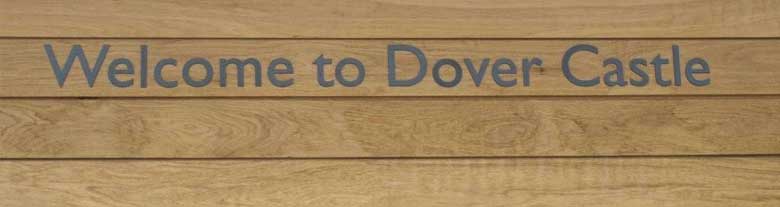
Our second most expansive range is our Feather Edge cladding. These boards are feathered through the middle, meaning that you get two pieces from one! There are two ways of fixing the boards: you can either single pin or double pin them. Each has its advantages and disadvantages; however, either way it's important that you don't use the same nail or screw through two of the boards. If you do, the Oak will rip itself from the wall.
Our Feather Edge profiles include (horizontal fit only):
- IWC9 - 200mm x 25-9mm
- IWC10 - 150mm x 25-9mm
- IWC17 - 200mm x 20-8mm
- IWC19 - 150mm x 20-8mm
- IWC21 - 175mm x 16-6mm
- IWC22 - 150mm x 16-6mm
All of the profiles allow for a 25mm overlap.
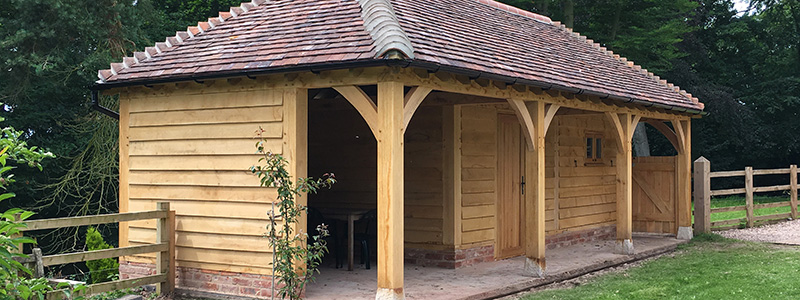
Oak is also available in Shiplap cladding, which is distinctive for the groove along the face of the timber, designed to allow water to run off easily. We offer both a T&G and a half lap style profile.
We supply the following Shiplap profiles (horizontal fit only):
- IWC6 - Half Lap
- IWC7 - T&G
Our Rainshield cladding - also commonly known as Rainscreen - comes in the shape of a rhombus. Unlike other claddings that either interlock or overlap, these boards almost sit on top of each other, with their shape providing the coverage.
Our only Rainshield profile is:
- IWC8 - Horizontal fit - Face fixed
We also offer Waney Edge Oak for cladding, which is perhaps the most traditional form of cladding we supply. The boards are overlapped roughly to form a wave-like pattern on the face. The wane on the edge of the board you leave facing outwards is bark, so you can see how the tree was formed, giving a unique perspective compared to other cladding options.
Like Feather Edge, Waney Edge is horizontal fit only and is supplied in the following profile:
- IWC11 - 185mm face (approximately 25% overlap)
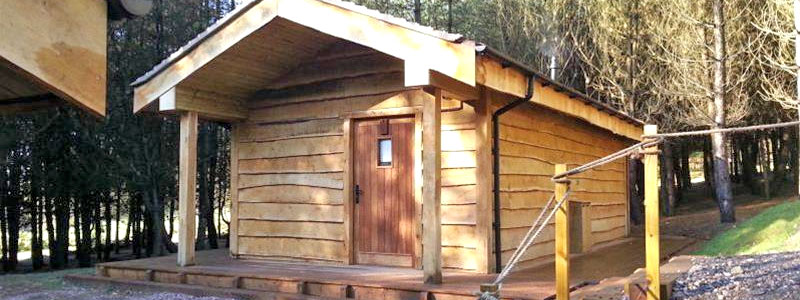
One of our newer products is Board on Board cladding, which is designed to have a large face, using two planed all round pieces of different sizes. How the fit works is up to you: you can either put the small board at the back or the front, so you control the effect of the cladding.
We offer two styles of Board on Board cladding (both vertical fit only):
- IWC28 - 145mm and 69mm wide boards
- IWC29 - 95mm and 45mm wide boards
That then leads us on to the most recent addition. Half Lap cladding is a wider board designed without an interlocking T&G. Instead, the tongue overlaps the back part of the previous board, making it almost seamless. The boards also have relief grooves on the back face to help avoid warping.
The two Half Lap cladding profiles we offer are:
- IWHL1 - Vertical fit only
- IWHL2 - Vertical and horizontal fit
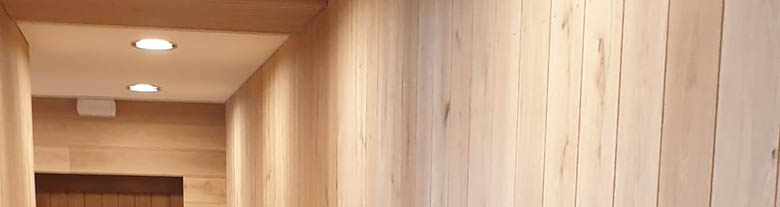
Drawings and full details of every profile are on our external timber cladding profiles page.
Fresh Sawn or Kiln Dried Oak Cladding
When choosing between fresh sawn and kiln dried Oak, the differences become more than just the style of cladding you would like. Firstly, because it is freshly cut from the log, fresh sawn is a lot more cost effective than the kiln dried options, particularly feather edge (which can be around a third of the price per m² of kiln dried).
Other things to consider are maintenance. With fresh sawn only being supplied in profiles that overlap, you don't need to treat the wood, because as the timber naturally moves it will never move so much that the cladding leaves the building exposed. You can leave the timber to naturally weather to a silver grey, and you will get surface splits and cracks forming as the wood expands and contracts over the years. We cover this in more depth in Do you need to treat green oak?
Kiln dried, on the other hand, requires sealing on all four sides and both ends before it is fitted to the wall. Oak isn't naturally stable, so if you allow kilned Oak to take on moisture it will expand, which causes issues with profiles that don't allow room for movement, for example our T&G products.
How Oak Cladding Weathers and Finishes
Over time Oak will weather to a silver grey colour. Even if you reapply UV protection to the face of the boards, they will still eventually fade.
When sealed correctly, kiln dried boards should remain stable and continue to protect the building they are fixed to. If these timbers do start to go silver and you would prefer to keep the colour, in some circumstances you can sand back the face to reveal the colour again. However, this needs to be done as early as possible, and the board will need resealing where it has weathered.
Fresh sawn Oak will naturally turn grey over time, and you can't seal it like kiln dried to keep the colour. The problem with sealing a fresh sawn product is that as moisture tries to escape it gets caught behind the sealant, which causes mould to build up. So you need to wait for the surface to dry first, and by then a lot of the weathering process will have started to take place. Our guide to unfinished external cladding explains what to expect, and Can I leave oak untreated? takes a deeper look.
First of all, the boards will either expand or contract (depending on the season) as they take on or lose moisture. With Waney Edge cladding you won't notice much difference at first, until the surface starts to split and crack, which naturally occurs with Oak. Then, over time, like all timber the colour will fade to silver grey. You might notice the bark wear away and fall off, but that doesn't affect the structure of the cladding.
The change in Feather Edge will be the most dramatic outside of the usual weathering and cracking. When you fix the timber, if you pin once along the face of the board, the timber will curl upwards as the thinner part of the board dries faster. This creates a natural flow for water to run away from the building; however, it leaves the building more exposed to driving rain.
The alternative is to pin twice, which helps to limit the amount of cupping the wood will do, but the trade-off is that the Oak will split more dramatically along the face as the timber moves in different directions around two fixed points. So the trade-off comes down to your own preference on how you want the timber to behave.
Fixing Oak Cladding: the Essentials
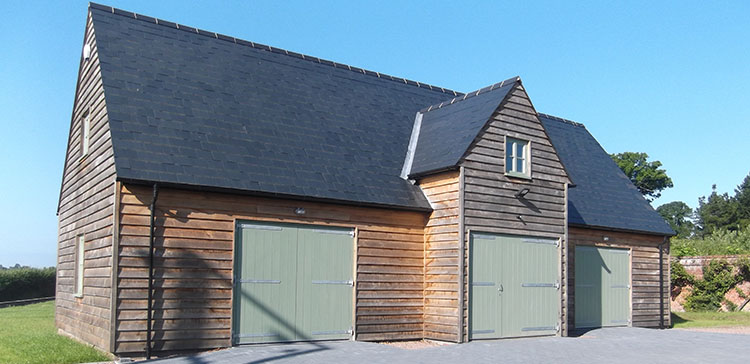
Oak cladding should be fixed on top of battens (running in the opposite direction to the cladding) at 400mm to 600mm spacing. We also recommend installing a breathable membrane behind to help promote airflow; this helps to protect against mould build-up and rot. Battens, membrane and fixings are all available on our cladding accessories page.
It's important to use stainless steel nails or screws. This prevents blue stains appearing on the face of the wood as the metal corrodes. The length of the screw needs to be the thickness of the cladding plus half the depth of the batten you're fixing to. When using nails, it's best practice to pre-drill the board to prevent the wood from splitting.
Most profiles are face fix; however, there are a few where you can use the tongue of the top board to hide any fixings, which is a look a lot of people prefer. When fixing, it's important to note that each nail or screw should only go through one board. At no point should two of the cladding boards be pinned together; if you do this, the Oak will pull itself off the wall as the boards move against each other.
For the full picture, read our fixing information for hardwood cladding and our guidance on fitting Oak Tongue and Groove cladding. These are a starting point; you should consult a professional installer before fitting your cladding, as every scenario is different.
European Oak or English Oak
Both European and English Oak are the same species, so the only differences are slight and due to growing conditions. English Oak tends to be slightly paler and contain more knots than European; however, because there is less availability it does tend to be more expensive. You can price English Oak cladding separately on our website. If you have come across American Oak, that is a different species again, and we explain why it isn't used for cladding in European vs American Oak.
Frequently Asked Questions
Does oak cladding need treating?
Fresh sawn oak cladding does not; it is left to weather naturally. Kiln dried cladding will need treating and sealing on all four sides and both ends to protect the wood against moisture movement.
How long does oak cladding last?
As long as it has been treated and fitted correctly, oak cladding can last for 25 to 30 years on the wall. This is in good conditions though; constant exposure to bad weather and areas of high moisture can cut the lifespan. This is true of any timber.
Does oak cladding stain the wall below it?
Fresh sawn cladding can leak tannins as it dries, which can leave a stain. If fitting above a wall or stone patio, we recommend protecting that area before fitting the cladding. You can remove the protection once you are sure the tannins have stopped leaking.
What is the difference between Prime and Light Character oak?
Prime oak will have fewer knots than Light Character. However, any knots in either grade will be sound, and the grade makes no difference to the durability of the timber.
Can oak cladding be fitted vertically?
Yes. There are a variety of tongue and groove cladding boards which are suitable for vertical fitting; the most popular is our IWC5. Board on Board and IWHL1 Half Lap are vertical fit only.
How much oak cladding do I need?
The square meterage of cladding you need can be calculated by multiplying the width by the height of the wall(s) you are covering. We then recommend adding 10% for wastage. Our online calculators work the price out for you.
What fixings should I use for oak cladding?
Always use stainless steel nails or screws when working with oak. This prevents blue stain on the surface of the wood, which is caused by a chemical reaction between the tannins in the oak and ordinary steel.
Can I order a sample of oak cladding?
Yes, you can order a sample from our samples page. We don't carry profile samples though, so we usually send a planed all round piece so you can get an idea of colour and grade.
Is oak cladding sustainable?
Yes. iWood holds full FSC® chain of custody certification (FSC® C134890) and our oak cladding can be supplied as FSC certified on request. To maintain the chain of custody, you do need to request that your cladding is FSC when you order, using the special instructions box on the shopping basket page.
Read More About Oak Cladding
For more information on Oak cladding you can find further reading on our website:
You can get European Oak in the following types of cladding: